


Ikaria is also known for its very special honey. It is considered a regional specialty with a long tradition and exceptional quality. Its uniqueness comes from the combination of climate, plant diversity, traditional beekeeping, and the island’s unspoiled landscape. Particularly famous is the so-called Anama honey, a heather honey mainly produced from the nectar of the plant Erica manipuliflora, which the bees collect during winter. Depending on the region and flowering season, it may also contain elements of the strawberry tree (Koumaria / Arbutus unedo), which gives the honey additional depth and a slightly bitter note. This honey is characterized by its dark color, thick texture, and intense, strong caramel-like flavor. Scientific studies describe it as a honey with a unique aroma and taste profile, as well as a high content of valuable phenolic compounds. Many Ikarians swear by Anama honey as an immune system booster during the cooler season. Some men in particular have told me that a daily teaspoon does them good—whatever exactly they mean by that...
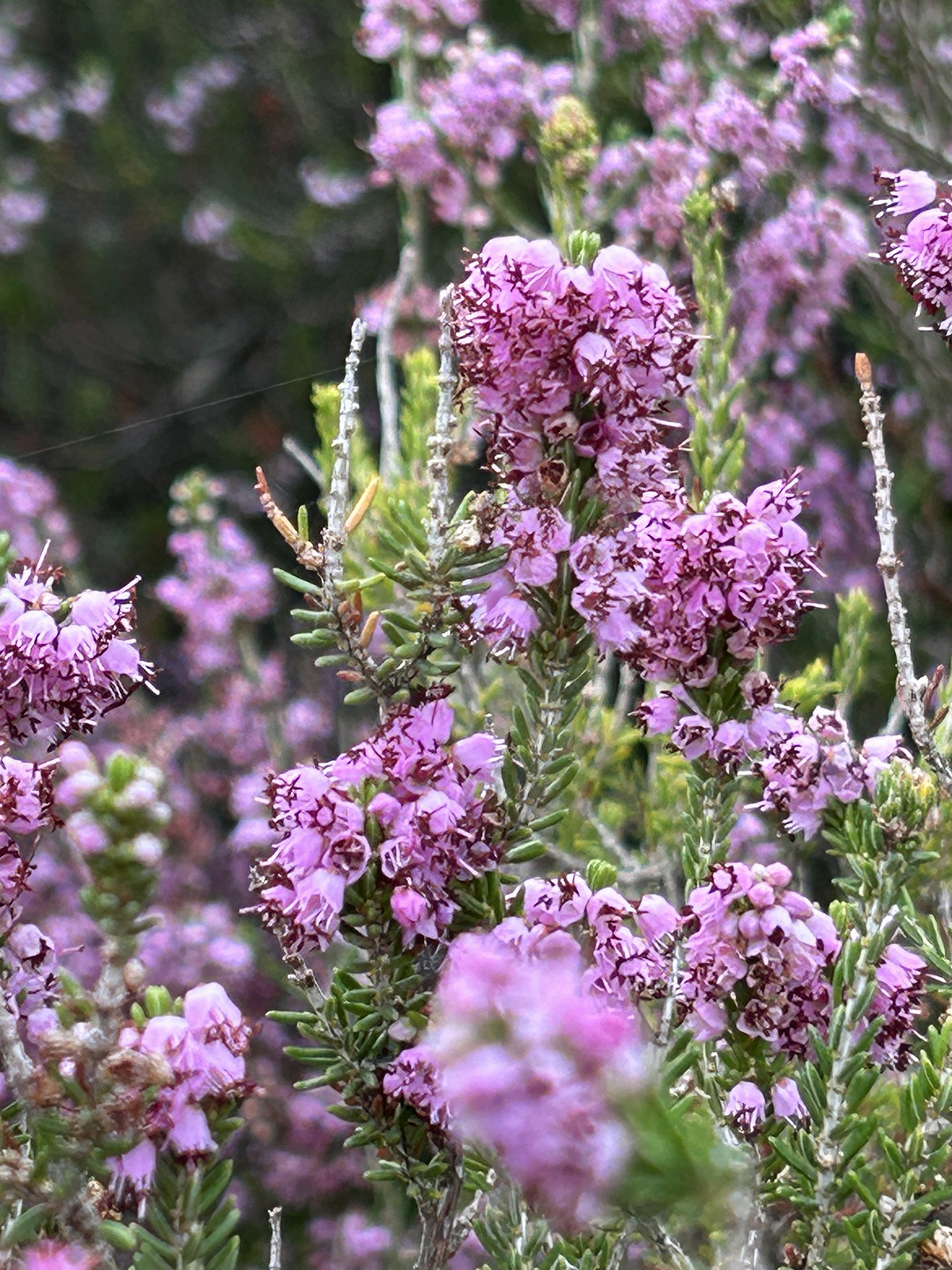
Anama (Άναμα) - heather blossom - Erikablüte
Another important honey on Ikaria is thyme honey. Wild thyme grows on the sunny, dry mountain slopes of the island and gives the honey its intense aroma, golden color, and characteristic slightly spicy taste. Thyme honey has been valued in Greece since ancient times and is considered particularly high quality. Equally important is pine honey. It is not produced directly from flower nectar, but from honeydew left by insects on pine trees. As a result, pine honey has a mild, less sweet taste, a darker amber color, and a particularly high mineral content. On Ikaria, where extensive pine forests shape large parts of the landscape, this honey develops a particularly fine, resin-like aroma and is highly appreciated for its long shelf life..
In spring, flower honey also plays an important role. During this season, the island is covered with an impressive variety of wildflowers and blooming herbs. The bees collect nectar from countless blossoms, giving the honey a particularly delicate, balanced, and complex aroma. This spring honey reflects the colorful plant world of Ikaria especially well and is considered an expression of the island’s natural diversity.
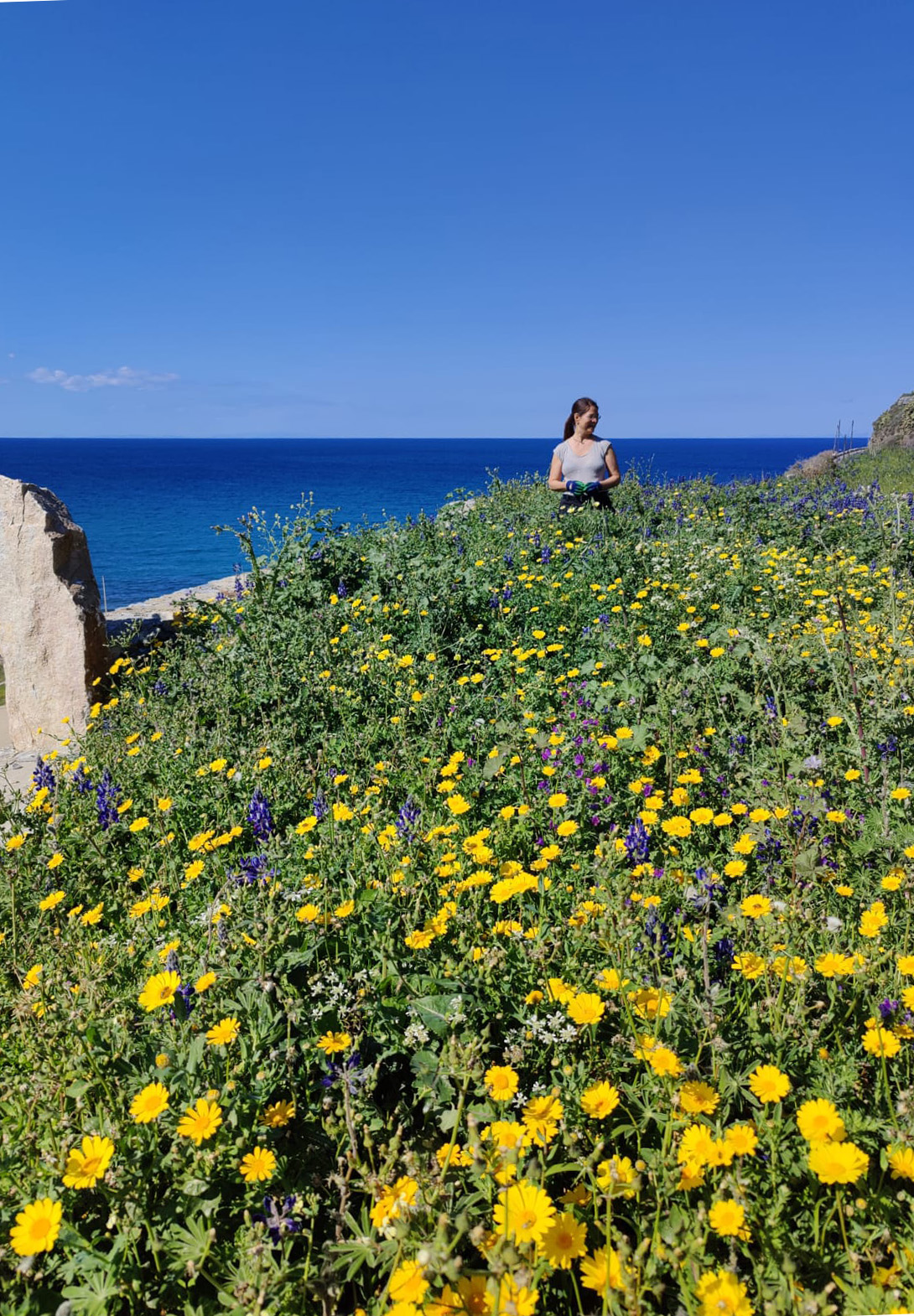
The special quality of Ikarian honey is strongly connected to its natural environment. There is very little industrial agriculture on Ikaria, which has allowed the landscape to remain pure and unspoiled. The bees collect nectar from a rich variety of wild herbs, heather plants, pine trees, thyme, and spring blossoms. This clean environment ensures a natural honey without artificial additives. Traditional beekeeping also plays a major role. Honey production on Ikaria goes back many centuries—first records date back to the year 1420. Even then, honey was valued as an important export product. To this day, beekeepers continue to work with gentle traditional methods, preserving an important cultural heritage of the island.
Many people also connect Ikarian honey with the island’s so-called “Blue Zone,” a region where an unusually high number of people live to a very old age. Honey has been part of the daily diet there for generations and is valued not only as a sweetener, but also as a natural remedy..
In summary, honey from Ikaria is much more than just a food product. It represents nature, health, tradition, and quality of life. Whether it is Anama honey, thyme honey, pine honey, or aromatic spring flower honey—each variety tells its own story and reflects the special landscape and lifestyle of Ikaria.
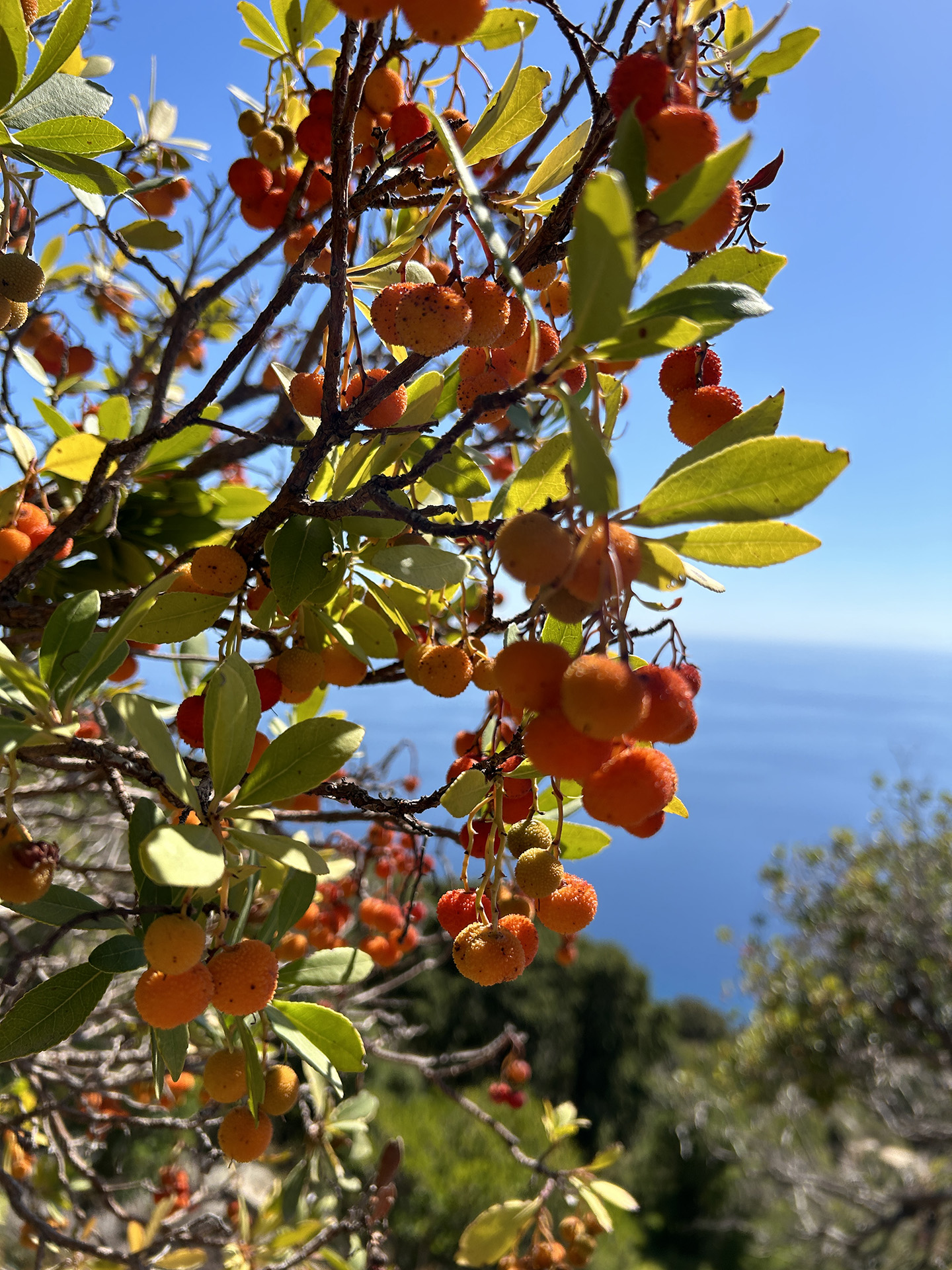
Strawberry-tree, κουμαριά, Erdbeerbaum


